Custom special-purpose machines and industrial robots
Enteha Group designs and builds industrial machines, robots and test equipment from scratch for each client's specific process — from requirements and concept design through detailed design, engineering analysis, fabrication, assembly, quality control and commissioning. Where no off-the-shelf machine exists, or the available ones do not fit your line, we build one that does exactly that job.
Our office and partner workshops are in Tehran and Isfahan, and we work for clients across Iran. We take one-off orders, and quotes are free.
At a glance
- What we build
- Special-purpose machines, test rigs, industrial, service and mobile robots, CNC machines and industrial 3D printers
- Scope
- Requirements, design, engineering analysis, fabrication, assembly, quality control, commissioning
- Size of past work
- Machines from 10 to 250 kg and structures of about 1–2 tonnes
- Typical timeline
- Simple special-purpose machine: 1–2 months design and 1–2 months fabrication
- Order size
- From a single machine to series production
- Quote
- Free, usually within 1–2 weeks
- Support
- Faults fixed for 2 months after delivery; warranty and upgrades by contract
- Location
- Tehran and Isfahan; serving all of Iran
What machines do we design and build?
Special-purpose machines (SPM)
A machine built for one step of your process — feeding, handling, sorting, cutting or assembly — when there is no ready-made machine for it on the market.
Test rigs and test equipment
Mechanical test machines for laboratories and quality control, built to standards such as ASTM — including a six-degree-of-freedom knee prosthesis test rig.
Industrial, service and mobile robots
Sorting robots, delivery and serving robots, and cable-driven robots — from mechanism and chassis design to drive and control systems.
Medical and rehabilitation robotics
Design, fabrication and control of robotic systems for research and rehabilitation, together with universities and research centres.
CNC machines and industrial 3D printers
Structure design, drive and motor selection, electronics, firmware and control set-up — from an FDM printer with a 500 × 500 × 400 mm build volume to a CNC with a table of about 100 × 100 cm.
Mechanism design and engineering analysis (FEA)
Checking the strength, deflection and behaviour of structures and mechanisms with finite element analysis before money is spent on fabrication.
Reverse engineering and redesign
Drawings made from an existing sample, and redesign of a machine or part that has no drawings or needs to be improved.
How we work
Discussion and requirements
You send a description, drawings, photos or a sample, and together we pin down capacity, accuracy and process constraints.
Free quote
After a technical review and consultation with our advisers, we usually send the price and schedule within 1–2 weeks.
Design and analysis
Concept and detailed design, engineering analysis and component selection, with your approval at each stage.
Fabrication and assembly
Fabrication in our partner workshops and assembly supervised by the same engineer who designed it.
Quality control and testing
Dimensional inspection and functional testing before delivery.
Delivery, commissioning and support
Delivery and commissioning, and faults fixed for 2 months after delivery.
Related projects
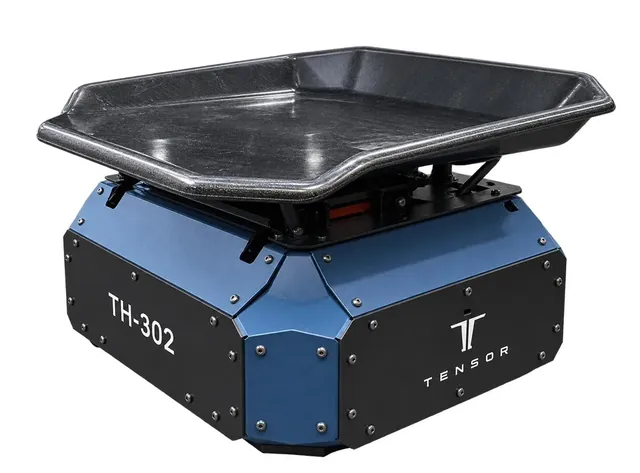
Postal sorting robots (2020–2025)
Autonomous parcel-sorting robots for Iran Post. We built and assembled generations 1 and 2: 50 units for Tehran and 30 for Kermanshah. Our generation 3 design (unloading mechanism, weighing, structure and drive system) went into production in a run of 200 units. Second place at the 26th Khwarizmi Youth Festival.
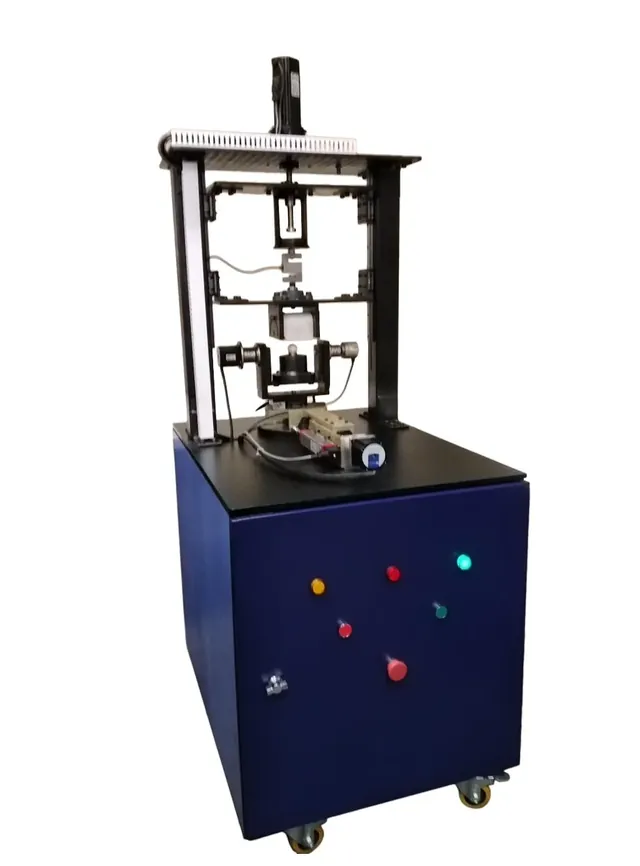
Knee prosthesis constraint & stability test rig (2021)
Tests total knee prostheses in six degrees of freedom to ASTM F1223 — the first rig of its kind made in Iran, where commercial equivalents come from companies such as EndoLab and AMTI. Mechanical design, automation, PLC and HMI. Recognised by the Alborz Elite Prize and the Khwarizmi Youth Festival.
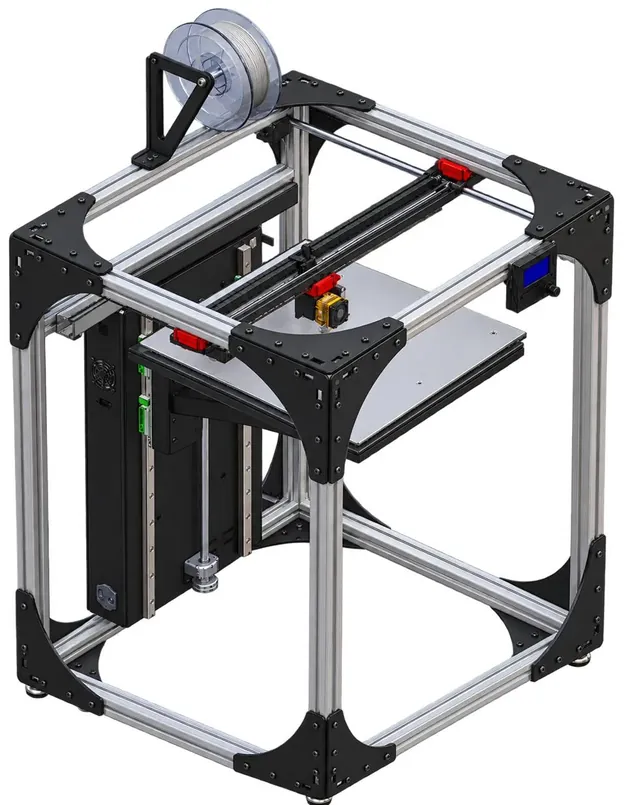
Industrial FDM 3D printers (2020–2023)
Five machines designed and built from scratch, up to a 500 × 500 × 400 mm build volume with industrial ball screws and linear rails on every axis; our own structure, electronics and firmware.
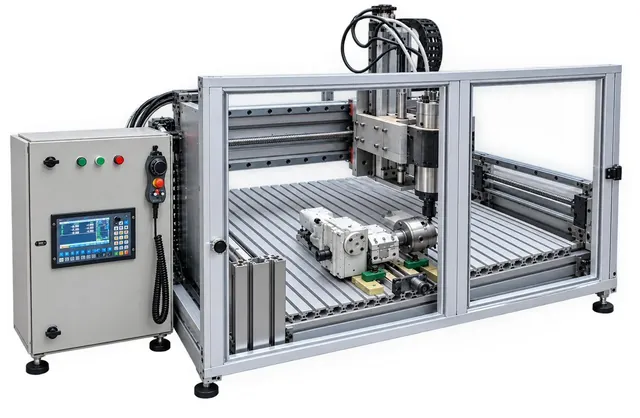
Dual-purpose industrial CNC (2023)
A CNC for cutting wood and light metals with a table of about 100 × 100 cm that becomes a 3D printer by swapping the head; built for small and medium workshops.
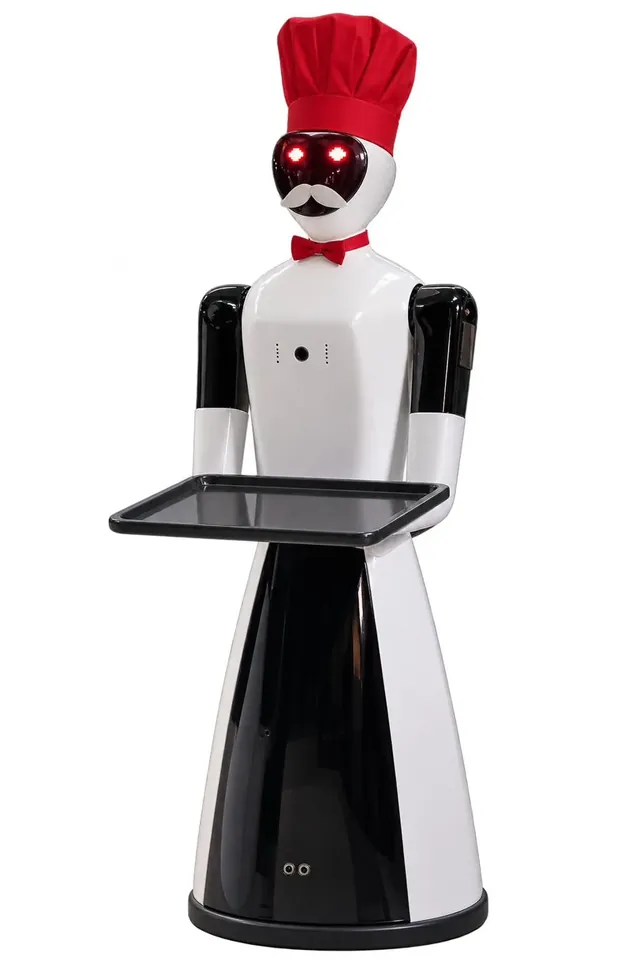
Waiter robots (2021)
A fleet of seven food delivery and serving robots, with a chassis and drive system designed to stay stable on uneven restaurant floors.
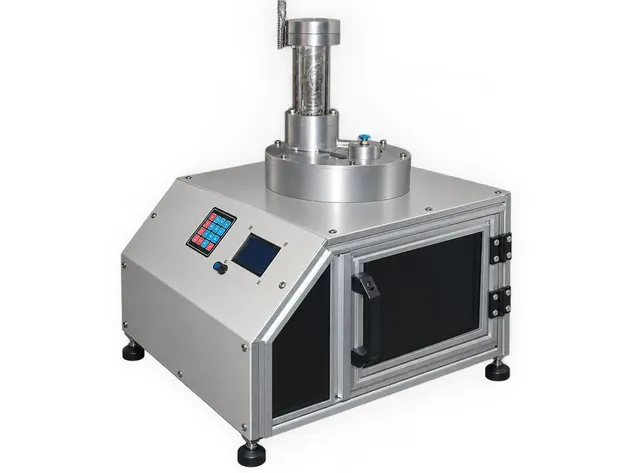
DMD powder feeder (2019)
A powder feeder for laser direct metal deposition, controlling the feed rate between 1 and 100 g/min.
Why Enteha?
- One owner from design to assembly. Most outsourcing trouble starts when design, fabrication and assembly are in different hands and nobody sees the whole machine. At Enteha, the engineer who designs it stays with fabrication and assembly to the end.
- A core engineering team plus a partner network. Three mechanical engineers from Sharif University of Technology, IUST, K. N. Toosi and Tarbiat Modares University, working with industrial workshops and specialist engineers in analysis, quality control and consulting.
- A track record you can check. 80 postal sorting robots built for Iran Post, the first knee-prosthesis test rig of its kind in Iran, the Alborz Elite Prize and two Khwarizmi Youth Festival awards, and papers in Scientific Reports and the International Journal of Mechanical Sciences.
- Quality control before delivery. We carry out dimensional and weld inspection and functional testing ourselves before anything ships.
Industries we have worked for
- Medical and dental devices
- Postal and logistics
- Additive manufacturing (3D printing)
- Universities and research centres
- Service robotics
Who does the work?
 Hassan Nasiri KhonsariTechnical & Design DirectorMSc Applied Design, Sharif University of Technology · BSc Mechanical Engineering, IUST
 Alireza PirhajiManufacturing & Quality LeadMSc Manufacturing Engineering, Tarbiat Modares University · BSc Mechanical Engineering, Sharif University of Technology
 Seyed Mostafa BanihashemiProject & R&D LeadMSc Applied Design (Dynamics, Control & Robotics), Sharif University of Technology · BSc Mechanical Engineering, K. N. Toosi University
Frequently asked questions
How much does a special-purpose machine cost?
It depends on complexity, size, accuracy and quantity, so there is no fixed price. Send us a description and you will usually receive a free quote within one to two weeks.
How long does it take to build a machine?
Depending on the project, anything from one or two weeks to about a year. For a simple special-purpose machine, design usually takes 1–2 months and fabrication another 1–2 months.
Do you take orders for a single machine?
Yes. We take everything from a single machine to series production; the right quantity for a series depends on the project.
What sizes and weights have you built?
Machines from about 10 to 250 kg and structures of about 1–2 tonnes. We choose the material of each part for its application — from steel and 316 stainless to aluminium, engineering plastics and composites.
Do you do reverse engineering?
Yes. We produce drawings from an existing machine or part and, where needed, redesign and improve it.
Is the quote free? How long does it take?
Yes, quotes are free. A quote usually takes one to two weeks, because our engineers review the job technically and consult the group's advisers before giving a price, so that the price and schedule we quote are realistic.
What do you need to get started? Which drawing formats do you accept?
Whatever you have is enough: 2D drawings or 3D models in any format (such as STEP, DWG, DXF, SolidWorks or PDF), photos, a hand sketch, or just a description of the job. If you have a physical sample but no drawings, we reverse-engineer the drawings from the sample.
What support do you give after delivery?
For machines we designed and built ourselves, we fix any faults for two months after delivery (separate from new requests from the client). A longer warranty, repairs and upgrades can be written into the contract however the client wants. If the design came from the client and we only did the fabrication, we still fix faults caused by the design, but that work is charged separately.
Do you only work in Tehran and Isfahan?
No. Our office and partner workshops are in Tehran and Isfahan, but we work for clients across Iran.
Other Enteha services
Last updated:
Contact
For design, fabrication or automation projects, use the form below or reach us directly. Quotes are free and usually ready within one to two weeks.
Other ways to reach us: